
Burnaby Tutors: A Parent's Guide to Choosing In-Person & Online Help (Metro Vancouver)
When "He Just Isn't Clicking" Finally Has a Name
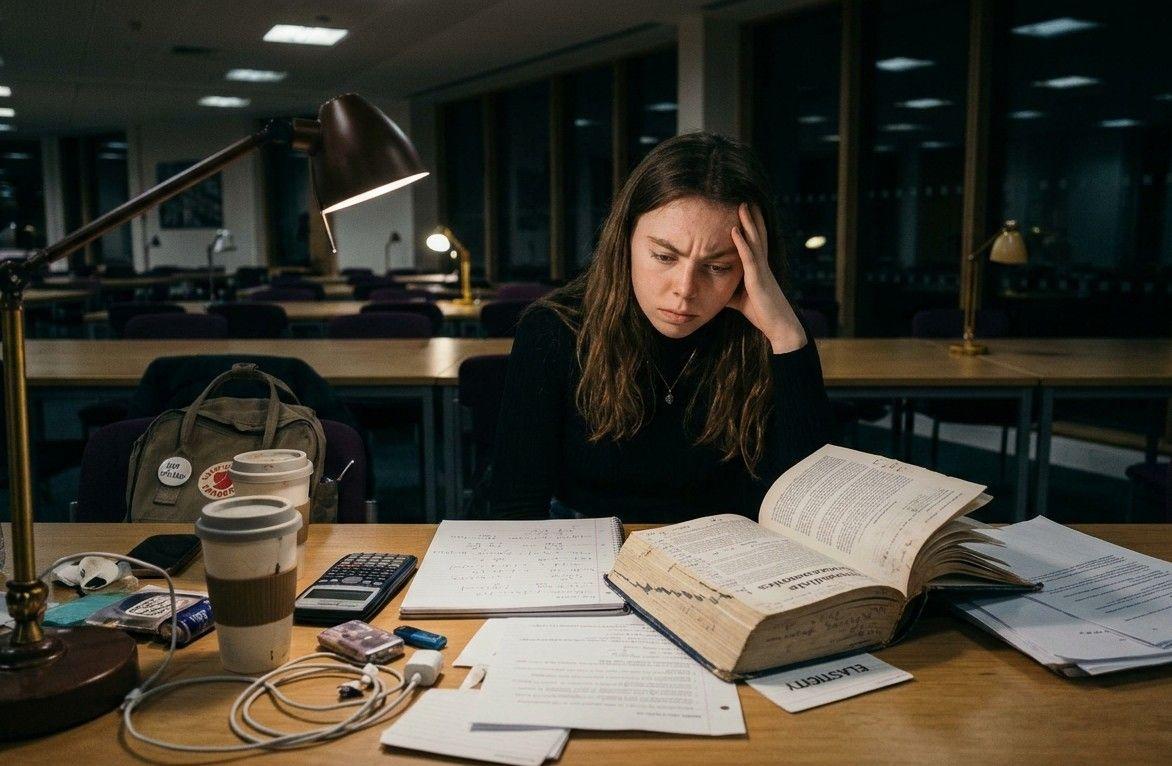
If you're a parent in Burnaby searching for tutors, you've probably already had a version of this conversation at the kitchen table: the homework is taking twice as long, the test came back lower than expected, and your child shrugs and says, "I don't get it." You're not looking for miracles. You're looking for someone who can figure out why it isn't clicking — and fix it.
Here's the thing most families discover too late: a struggling grade is rarely about ability or effort. It's almost always about small concept gaps that compound. A student who never fully understood how to isolate a variable in Grade 8 will quietly struggle through Pre-Calculus 12 — not because the new material is too hard, but because the foundation underneath it has a crack in it. Good tutoring isn't about drilling harder. It's about finding that crack and repairing it.
This guide walks you through how to choose among Burnaby tutors honestly — what to look for, what to ignore, and how to tell the difference between a tutor who patches symptoms and one who fixes the actual understanding. We'll cover in-person versus online, what good tutoring actually looks like week to week, and how to match help to the BC curriculum and local post-secondary courses at UBC and SFU.
Not sure where the gap is? Book a free assessment — no pressure, just clarity.
The Question Behind the Question: Does My Child Actually Need a Tutor?
Before you hire anyone, it's worth being honest about what you're seeing. Not every dip in grades needs a tutor — sometimes it's a rough unit, a tough teacher fit, or a busy term. But there are signals worth taking seriously:
- The struggle is spreading. One hard chapter is normal. When confusion in one topic starts dragging down the next (algebra → functions → calculus), that's a compounding gap.
- Homework time has ballooned, and most of it is frustration rather than work.
- Your child is "surviving by memorising." They can recite steps but can't explain why — so a slightly different question on the exam throws them completely.
- The confidence is gone. "I'm just bad at math" is almost never true. It's usually a foundation problem wearing a confidence costume.
- The fog before the exam. They studied, but on test day it all evaporates. That's the signature of memorisation without understanding.
If two or three of these ring true, a tutor is likely worth it — but which kind matters enormously. For a deeper look at this, our guide on whether your child needs a tutor breaks down the signals in more detail.
Drill-and-Forget vs. Fix-the-Foundation: The Difference That Decides Everything
This is the single most important distinction when comparing Burnaby tutors, and it's the one most parents don't know to ask about.
Most tutoring defaults to practice gaps — "let's do twenty more of these." That helps if practice is genuinely the only thing missing. But far more often, the real issue is a concept gap: the student doesn't understand the underlying idea, so more practice just reinforces the wrong mental model, faster.
Consider a real example from Chemistry 11. Students often try to memorise stoichiometry as a sequence of button-presses. But the whole topic rests on one idea — the mole ratio from a balanced equation. Take the combustion of methane:
CH₄ + 2 O₂ → CO₂ + 2 H₂O
If you have 3.0 mol of CH₄, the balanced ratio tells you everything:
mol O₂ = 3.0 mol CH₄ × (2 mol O₂ / 1 mol CH₄) = 6.0 mol O₂
A student who memorised a procedure panics when the question is reworded. A student who understands that the coefficients are a ratio can handle any version. That's the whole game — and it's why we diagnose the concept gap first, not the symptom.
The same pattern shows up in physics. Kinematics looks like a wall of formulas until a student sees that they all describe one story: position, velocity, and acceleration over time. One worked equation, understood:
v = v₀ + a·t
If a car starts at v₀ = 5 m/s and accelerates at a = 2 m/s² for t = 4 s, then v = 5 + (2)(4) = 13 m/s. Once that clicks, the student stops memorising four separate equations and starts reasoning. You can read more about why cramming fails and understanding sticks on our blog.
When you interview any tutor, ask them directly: "How do you figure out why my child is struggling?" If the answer is "we'll do more practice," that's a drill shop. If they talk about diagnosing where the understanding broke down, you're in the right place.
What PhD-Led Tutoring Actually Means (and What It Doesn't)
You'll see "PhD-led" on our pages, so let's be precise and honest about it. It does not mean a PhD personally teaches every single session — that's not how a quality practice scales, and any service claiming otherwise is overselling.
What it does mean: Dr. Shreyank Gupta (Ph.D.) sets the method and the quality bar, and a team of qualified tutors delivers it across the full range of subjects — from K–7 foundations to Pre-Calculus 12, Physics 11/12, Chemistry 11/12, Organic Chemistry, Biology, and university coursework. The PhD leads and oversees; the method is consistent whoever you work with.
Why does that combination matter? Because plenty of tutors have either deep subject mastery or a teaching method — rarely both, under one roof, across every subject. An understanding-first approach, set by someone who has worked at the frontier of their field and knows exactly where concepts connect, is what lets a tutor spot a Grade 9 gap that's quietly sabotaging a Grade 11 course. You can see the full range on our programs page.
Want to know exactly where the foundation cracked? Book a free, no-pressure assessment and we'll show you — before you commit to anything.
In-Person in Burnaby or Online Across Metro Vancouver: How to Choose
One of the best things about tutoring today is that you genuinely have a choice — and neither option is "lesser." The right pick depends on your child and your logistics.
In-person (Burnaby) tends to suit younger students (K–7), kids who are easily distracted, or anyone who focuses better with a tutor physically beside them. The face-to-face accountability is real, and for foundational reading and math, that presence matters.
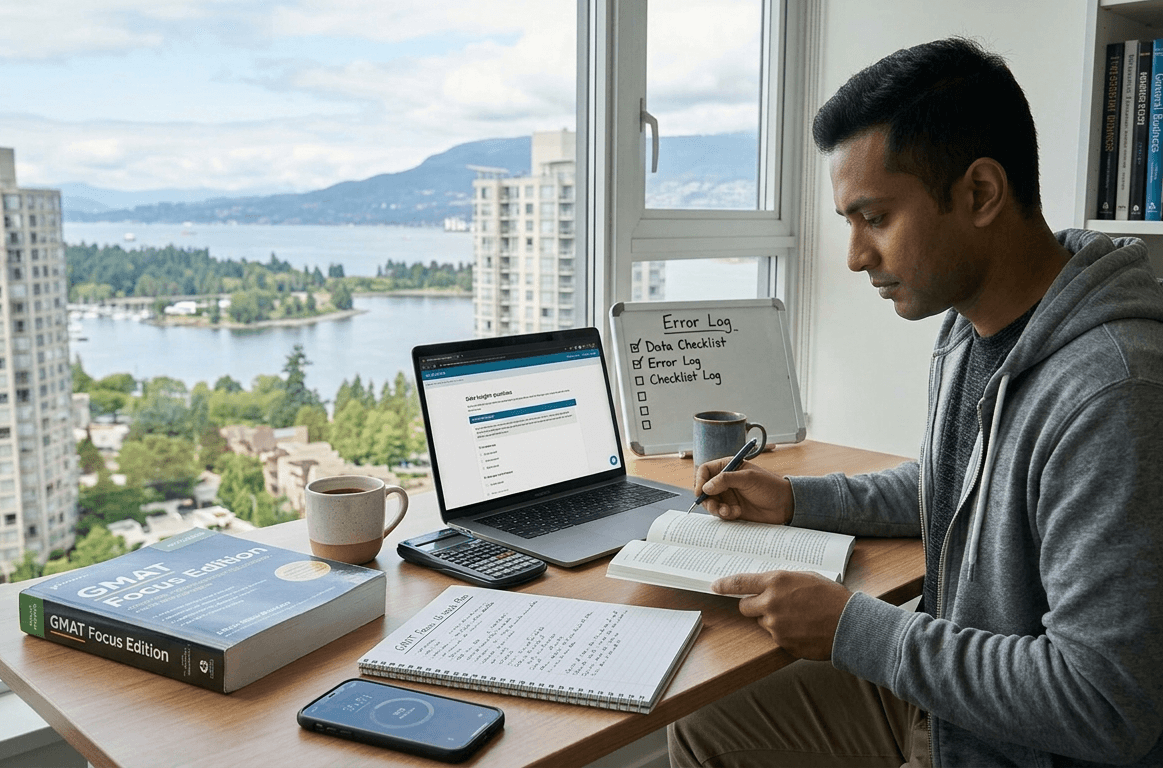
Online works beautifully for high school and university students who are comfortable with a screen, and it opens up the whole of Metro Vancouver — Vancouver, New Westminster, Coquitlam, Richmond, Surrey, and North Vancouver — without anyone sitting in traffic on Highway 1. A shared digital whiteboard, screen sharing of the actual coursework, and recorded sessions to review later are genuine advantages. For a UBC or SFU student debugging a calculus problem at 8 p.m., online is often ideal.
Many families mix both. A helpful rule of thumb: the younger the student or the shakier the foundation, the more in-person tends to help; the older and more independent the student, the more online shines. If you're weighing it up, our post on choosing in-person vs online tutoring goes deeper.
Matching Help to the Real Coursework: BC Curriculum, UBC & SFU
Good tutoring meets your child where the actual work is — not in a generic workbook. In BC, that means knowing the real landscape:
Elementary (K–7): This is where foundations are built — number sense, fractions, reading fluency. Gaps here are invisible for years, then surface painfully in high school. Fixing them early is the highest-leverage tutoring there is.
High school (Grades 8–12): The pivotal courses are Pre-Calculus 11 and 12, Calculus 12, Physics 11/12, Chemistry 11/12, and Biology. Pre-Calculus 12 in particular is the gatekeeper for most science and engineering paths at UBC and SFU — a student needs genuine fluency with functions, logarithms, and trig, not memorised steps. BC also has provincial Numeracy and Literacy graduation assessments, which reward reasoning over recall — exactly the kind of thinking an understanding-first approach builds.
SAT prep: For students applying to US schools (or wanting the option), the digital SAT tests Math and Reading & Writing. Here too, strategy built on real understanding beats cramming vocabulary lists. See our SAT preparation program for how we approach it.
University & adult learners: UBC's first-year calculus (the MATH 100/101 stream) and SFU's Calculus I/II trip up many strong high-school students because the pace and rigour jump sharply. Organic chemistry — "orgo" — is famous for it. The students who thrive are the ones who understand mechanisms, not memorised reactions. We also support adult learners upgrading for college or a career change — it's never too late to close a gap.
A quick example of why understanding wins in biology: a classic monohybrid cross between two heterozygous parents (Aa × Aa) gives the ratio
1 AA : 2 Aa : 1 aa → a 3 : 1 phenotype ratio
A student who memorises "3:1" is stuck the moment the question changes. A student who understands the Punnett square can derive it — every time, under any variation. That's the difference between surviving an exam and owning the subject.
Red Flags and Green Flags When You Interview Burnaby Tutors
When you reach out to any tutoring service, a short conversation tells you most of what you need to know.
Green flags: They ask about your child specifically before quoting a price. They offer a genuine assessment to find the gaps. They talk about understanding, confidence, and the "why" — not just grades. They're honest about what they can and can't do. They're patient and never dismissive.
Red flags: Guarantees of specific grades (nobody credible can promise an A — too many factors are outside a tutor's control). Pressure tactics and fake urgency ("only two spots left!"). Superlative spam ("the #1 tutor in Burnaby") with nothing to back it. A one-size-fits-all package that starts before anyone has looked at where your child actually struggles.
Trust your instincts. You know your child. A good tutor earns your confidence by listening first.
How a First Month Actually Looks
To set expectations, here's what working with an understanding-first practice typically feels like. It starts with a free assessment — a real conversation and a diagnostic to locate the concept gaps, not a sales pitch. From there, sessions are one-on-one and built around your child's real coursework and the specific gaps found.
Early on, you'll often see confidence return before the grade does — the student stops dreading the subject and starts engaging. Grades tend to follow, because the foundation is finally solid rather than patched. We won't promise a number; we will promise genuine effort to fix the actual problem. Along the way we build study habits and exam strategy, so your child needs us less over time, not more — which is exactly the point.
Ready to Find the Gap? Book a Free Assessment
If your child is stuck, frustrated, or just not clicking, the kindest and most practical next step is simply to understand why. That's what our free assessment is for — no pressure, no commitment, just clarity about where the real gap is and how to close it.
Book a free assessment at drshreyankeducare.com/book, or call or text us at 672-514-7587. We tutor in-person in Burnaby and online across Metro Vancouver — Vancouver, New Westminster, Coquitlam, Richmond, Surrey, and North Vancouver. Have a question first? Get in touch — we're happy to talk it through, honestly and without the hard sell.
Your child isn't "bad at math." They just haven't had the right explanation yet. Let's find it together.
Frequently Asked Questions
How much does tutoring in Burnaby cost, and is the assessment really free?
Rates vary by subject and level, so the honest answer is that it depends on what your child needs. The initial assessment is genuinely free and no-pressure — it's how we locate the concept gaps before anyone commits. Book it at drshreyankeducare.com/book or text 672-514-7587.
Is online tutoring as effective as in-person for my child?
For most high school and university students, online tutoring is just as effective — a shared whiteboard, screen sharing of the real coursework, and reviewable sessions work well. Younger students (K–7) or those easily distracted often benefit more from in-person sessions in Burnaby. Many families mix both.
Can you help with specific BC courses like Pre-Calculus 12 or Chemistry 11?
Yes. We cover the full BC curriculum — elementary foundations through Pre-Calculus 12, Calculus 12, Physics 11/12, Chemistry 11/12, Organic Chemistry, and Biology — plus provincial assessments, AP, IB, SAT, and university coursework at UBC and SFU.
Can you guarantee my child's grade will improve?
No — and you should be wary of any tutor who promises a specific grade, since too many factors lie outside a tutor's control. What we do commit to is diagnosing the real concept gaps and teaching for genuine understanding, which is what sustainable grade improvement is built on.
Need one-on-one help with this? Our tutors can guide you step by step.
Explore Our Tutoring Programs