
University Mathematics
University mathematics can quickly become overwhelming when concepts become increasingly abstract and problem-heavy. From calculus and linear algebra to statistics and advanced mathematical modeling, students often struggle to keep pace with lectures and assignments.
At Dr. Shreyank Educare, we simplify complex mathematical concepts through personalized instruction, step-by-step problem solving, and focused academic support.
What We Cover
- Calculus I & II
- Linear Algebra
- Differential Equations
- Statistics
- Probability
- Mathematical Modeling
- Applied Mathematics
- Cryptography
- Operations Research
Who Is This For
- Undergraduate math students
- Engineering students
- Business students taking statistics/math courses
- Students struggling with advanced problem-solving
- Students preparing for finals and major assessments
Program Format
- One-on-One Tutoring
- Assignment Support
- Exam Preparation
- Weekly Concept Reinforcement Sessions
Expected Outcomes
- Higher academic performance
- Better problem-solving speed
- Improved exam confidence
- Stronger conceptual understanding
- Better preparedness for advanced coursework
Our Approach
Building Conceptual Clarity
We simplify advanced formulas and theories into easy-to-understand concepts.
Step-by-Step Problem Solving
Students learn how to solve complex mathematical questions with confidence.
Assignment & Exam Support
Support for coursework, assignments, quizzes, and final exams.
Applied Learning Methods
We help students understand how mathematics applies to real-world industries and careers.
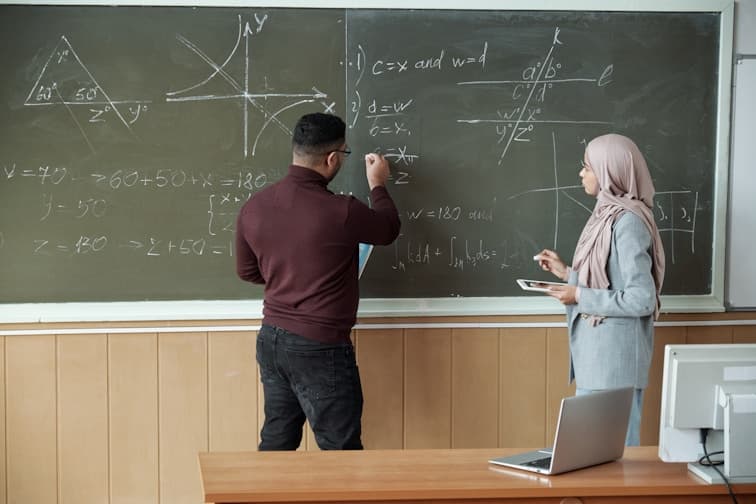
Accelerated Learning
Courses We Support
Coverage across the local university and college curriculum
University of British Columbia
Statistics
- STAT 200
- STAT 203
- STAT 251
Linear Systems and Engineering Linear Algebra
- MATH 152 — Linear Systems
Differential Calculus
- MATH 100
- MATH 102
- MATH 104
- MATH 110
- MATH 120
- MATH 180
- MATH 184
Integral Calculus
- MATH 101
- MATH 103
- MATH 105
- MATH 121
Langara College
Statistics
- STAT 1123
- STAT 1124
- STAT 1181
Linear Algebra
- MATH 2362
Differential Calculus
- MATH 1153
- MATH 1171
- MATH 1173
- MATH 1174
- MATH 1253
Integral Calculus
- MATH 1271
- MATH 1273
- MATH 1274
STAT 1123, STAT 1124 and STAT 1181 are alternative introductory statistics courses intended for different programs. Students should confirm the appropriate course for their program and transfer plans.
Official course calendar →Course offerings and requirements may change. Students should confirm current course details and prerequisites in their institution's official academic calendar. Dr. Shreyank Educare is an independent tutoring service and is not affiliated with, endorsed by, or partnered with any university or college listed here.
Frequently Asked Questions
Have questions? We've answered the most common questions students and parents ask before enrolling.
At Dr. Shreyank Educare, we support University of British Columbia curriculum including Statistics (STAT 200, 203 and 251), Linear Systems (MATH 152), Differential Calculus (MATH 100, 102, 104, 110, 120, 180, 184) and Integral Calculus (MATH 101, 103, 105, 121) and Langara College curriculum including equivalent Statistics, Linear Algebra and Calculus courses.
University math tutoring in Burnaby/Vancouver rates vary by course level (intro calculus vs. advanced topics like differential equations or multivariable calculus). Book a free 30-minute consultation at Dr. Shreyank Educare for a quote specific to your course.
Yes. Beyond standard Calculus I & II, Dr. Shreyank Educare also covers Multivariable Calculus and Vector Calculus.
Yes. University Mathematics tutoring in Burnaby is specifically structured to support engineering students who need strong calculus, linear algebra and differential equations foundations for their coursework.
Yes, Dr. Shreyank Educare supports business students taking statistics or applied math courses including UBC's STAT 200/203/251 and equivalent Langara courses.
University calculus moves faster than high school math and is significantly more abstract and problem-heavy which is why Dr. Shreyank Educare focuses on step-by-step problem solving and building conceptual clarity rather than just formula memorization.
Dr. Shreyank Educare also tutors Differential Equations, Probability, Mathematical Modeling, Applied Mathematics, Cryptography and Operations Research.
Dr. Shreyank Educare’s university math tutoring in Vancouver is structured as one-on-one sessions, with assignment support, exam preparation and weekly concept reinforcement sessions.
Yes. Exam preparation and assignment support are core parts of Dr. Shreyank Educare program, with structured revision focused on the specific topics and problem types your final will cover.
Expected outcomes from university math tutoring in Burnaby/Vancouver include higher academic performance, better problem-solving speed, improved exam confidence, stronger conceptual understanding, and better preparedness for advanced coursework.
Related Tutoring Pages
Next steps
Sessions run one-to-one or in a small group, in person in Burnaby or online across Metro Vancouver. The most useful first step is a conversation — bring a recent test so we can identify where marks may be being lost.